Defining Uplink Types
You define uplink types in the Sites & Networks page.
An uplink type is a name for similar functioning uplinks. On the SCC, uplink types can be used across multiple sites and path selection rules can be created using these names. The name must be unique at a site (but it can be same across different sites) so that the system can detect which path selection rule uses which uplinks. Because path selection rules are global on the SCC, you are restricted to 8 uplink types.
Uplink types are the building blocks for path selection. You select the path preference order using the uplink types created, and it is used in various sites. Riverbed recommends that you reuse the same uplink types at different sites in order to label uplinks based on the preference for path selection. For example, you can label uplink types as primary, secondary, and tertiary based on the path selection preference. The uplink type can be based on the type of interface or network resource, such as Verizon or global resource of uplink abstraction that is tied to a network.
Note: On the SteelHead, this field is called the Uplink Name, on the SCC it is the Uplink Type. Riverbed recommends using the same name for an uplink in all sites connecting to the same network.
To define an uplink type
1. Choose Manage > Topology: Sites & Networks to display the Sites & Networks page.
2. Under Uplink Types, click the > to expand the page.
3. Click the + to display the New Uplink Type dialog box.
Figure: New Uplink Types
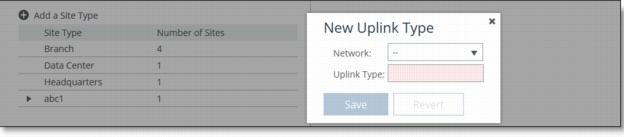
4. Complete the configuration as described in this table.
Adobe App V5701307 May 2026
Adobe App V5701307
While may appear to be a standard software build at first glance, it refers specifically to version 5.7.0.1307 of the Adobe Creative Cloud Desktop app . This critical piece of software acts as the central hub for managing your Adobe ecosystem, handling everything from application updates to cloud file synchronization. Key Features of Version 5.7.0.1307
Thank you, it said. We never lost him; we lost his name. Eli—he was ours. We had thought him a rumor. Your words put him back. Come by the quay if you can. adobe app v5701307
Data Dictionary
: Helps organize and clean up components like metrics and segments to ensure reporting accuracy. Third-Party Solutions for Usage Tracking Adobe App V5701307 While may appear to be
- Typo or miswritten string – It may be a corrupted file name, a placeholder, or an internal tracking number from a non-Adobe system.
- Third-party or fake installer – Scam websites sometimes name malicious files with random numbers (e.g.,
Adobe_App_v5701307.exe) to appear legitimate. Downloading such files can risk malware infection.
- Enterprise deployment ID – Large organizations may repackage Adobe apps with custom version tags, but
v5701307 is unusually long and not standard.
- Log or cache file – It could be a temporary folder or log generated by Adobe software (e.g.,
v5701307.log), not an actual app.
5. Click Save to save your settings.